
Rebecca Upjohn: Creating Through the Clamour
Feel like there’s not enough time in your busy day to be creative? You’re not alone. How do authors or illustrators continue to create while tackling everything else in their lives? About once a month as I’ll ask a writer or illustrator these types of questions. ‘Cause I want to know (I need all the help I can get in this department).
The Creator
name: Rebecca Upjohn
resides: Toronto and sometimes Harrisville, New Hampshire.
website: http://www.rebeccaupjohn.com
creates: So far? Picture books (1 fiction, 1 non-fiction), 1 mg (?) chapter book for 8-11 yr-olds
The Creations
The Last Loon, published by Orca Books, 2010
Patrick’s Wish, (co-authored with Karen Mitchell) published by Second Story Press, 2010
Lily and the Paper Man, Illustrated by Rene Bennoit, published by Second Story Press, 2007
The Clamour
work obligations: Um, I’d like to say I was a brain surgeon who worked for Doctors Without Borders or something impressive, but no, not at the moment.
kids: Two teenage boys who need less physical input (except when they need roadie services-drums and amps-to their gigs) but more time to talk things over. They like to have me and my husband around for toubleshooting, and they seem to appreciate being fed.
It took me a long time to figure out that they were fully capable of pulling their weight around the house. Everyone takes their turn to cook, clean, do laundry and walk the dog. A certain amount of standard maintenance is required on my part. Did you clean the bathroom? Yes. Did you clean the bathtub? No. Did you clean the toilet. No. Did you clean the counters? Mirrors? No. What did you clean? You know, the bathroom. Then when I go over the basic information again, they act as though it is all new information. It’s entertaining, really.
volunteer work: Cooking/serving breakfast for Out of the Cold during the winter. I recently retired from the school volunteering after 13 years.
the internet: a time sucker. It’s worse at the moment because I have a new computer and suddenly can access information I couldn’t on my old system. Just pushing the new buttons is using up precious time.
household stuff: I find juggling all the stuff to keep everyone on track takes time to plan and execute. By the time everyone is up and out the door and the dog has been walked and I’ve been to yoga class, three hours have passed. Sometimes I find I actually get more writing done if I go to the library where there are fewer distractions. I notice when I’m trying to meet a deadline, I let more things go. I don’t answer the phone, don’t check my email, don’t decide I have to clean out a closet. The fact is at home there are always things that are undone and they whisper, in subversive little voices, for attention.
Inevitably when I block out some time to work then one of the boys gets sick or needs a ride to school or can’t cook on their night or can’t walk the dog. As the person at home, I’m the fall back fixer.
How did you get started writing?
I started writing for my local community newsletter when I was living in New Hampshire. It was the first experience being “published” consistently. I wrote all different kinds of pieces. It fed my curiosity and satisfied my need to do creative work. Reading to my boys, I rediscovered how wonderful children’s books were. I began to make up stories for and about the boys. I’d write, illustrate and bind my own books.

After I moved back to Canada, I took some writing classes, most notably one from Barbara Greenwood. Then I wrote a story and submitted it to the annual Writers’ Union Writing for Children contest. When it placed among the twelve finalists, I realized people other than me and my friends/family saw merit in my writing (at least for that story) so I did what any sensible excited new writer would do, I put it in a drawer for two years.
I formed a writing group with a few others from Barbara’s class and continued writing. (Two of us from the original group are still together after ten years.) Finally one day in a mad moment I decided to send out the contest story. I went to the Canadian Children’s Book Centre and the librarian at the time suggested I look at Second Story Press for my story. So I read a bunch of their books and saw it was a good fit and I sent it. Ten months later they said yes.
What are you working on these days?
A non-fiction picture book set during the second World War.
What’s the hardest thing for you to manage in terms of finding time or space to be creative?
I’m not particularly organized and disciplined. I allow myself to get distracted. I also seem to need fallow periods. Is it procrastination or replenishing the well? Sometimes one, sometimes the other. When I’m in the thick of writing, I tend to try to shut out everything around me. At that point having to stop and cook or be a parent or a responsible adult makes me grind my teeth. On the other hand, breaking it into smaller chunks of time is healthier.
I have to take the time to exercise and eat properly or it take its toll on my body. So it’s a constant battle of forcing myself to start and then once I’m going forcing myself to stop and take care of myself. Sometimes it feels easier not to write and just be in my other roles.
Do any of the distractions end up feeding your creativity?
I have found sometimes when I walk the dog or cook or drive either new ideas will come up or solutions to problems I’ve run into writing a story. Another part of my brain is in charge of those activities and it frees up the thinking–thoughts flow differently. Once I was at the TSO with my husband and an idea for two characters and a picture book story came into my head. I wrote it down in a little notebook I carry and several years later that story is under consideration at a publisher.

How do you minimize your distractions while you’re working? Any tips for others?
Working in a place like the library where there are fewer things pulling at me works as a kick start, especially if I have had a long time between writing days. Once I’m back in the story in my head it’s easier to say no to things. I’ve even turned down paying work or renegged on something I agreed to do in order to use that time to write.
Oddly though, I work better when my family is around. It’s as if part of me knows they are all present and accounted for and that part of me can stop worrying. I think everyone needs to figure out what works for them. Virginia Woolf said 500 pounds and a room of one’s own will do it. I know people who work full time and still write books. They are usually very disciplined and highly motivated. Tim Wynne-Jones said only you know if you are procrastinating or if you are doing the work. So I think the best strategy is to not lie to yourself. Sooner or later you have to do the work, one word at a time. The rest is just chatter.
Are there times when you just can’t focus on your writing and if so how do you cope with them?
Yes, well, I’m not very great to live with at those times. My mode is to get anxious so then walking the dog helps. I try do do practical things, things which need to be done anyway. It has a calming affect. I’m less likely to snap someone’s head off.
Any tips on how to do something faster/more efficiently to get back to writing?
Well, you can avoid doing most everything by writing. And you can avoid writing by doing everything else. My favourite strategy for avoiding everything is lying on the floor with the dog and staring at the ceiling. To be more productive? I think what helps the most is to avoid comparing myself to anyone else. Comparison can be debilitating. Honour your own way of working and be truthful with yourself.
Are there any other creative genres you look to for inspiration?
Music. It affects my mood and sometimes that is what I need to get my creative mind flowing.
As a creative person, do you have any other outlets for your talents?
My background and training is in photography. I still like to create and use images. Also I play the flute–not very well–but having music in my life is really important. I also love to knit, sew etc. I learned to spin with a drop spindle and then a spinning wheel when I was nine years old. My grandmother once told me that as a child I was always making things. I still have that need. It’s the best strategy for reducing angst.
Why do you keep creating in the face of all this?
If I didn’t do creative work I’d be locked up in a padded room somewhere with seriously compromised mental health.
Hah! Well I’m glad you haven’t chosen the padded cell route. Thanks so much, Rebecca, for spending some of your valuable creating time here with me and sharing your tips with us. Here’s to minimizing your clamour and maximizing your creations!
© Lizann Flatt, www.lizannflatt.com
No part of this blog may be used without written permission from the author.
No part of this blog may be used without written permission from the author.

Peggy Collins: Creating Through the Clamour
Feel like there’s not enough time in your busy day to be creative? You’re not alone. How do authors or illustrators continue to create while tackling everything else in their lives? About once a month as I’ll ask a writer or illustrator these types of questions. Cause I want to know (I need all the help I can get in this department).
The Creator
name: Peggy Collins
resides in: a crooked little house beside the Salmon River in Eastern Ontario
website/blog: www.peggysillustration.com
creates: picture books, stories and illustrations
The Creations
Tooter’s Stinky Wish (coming in 2011) Fitzhenry and Whiteside
Fatou Fetch the Water, Red Robin Books, 2010
In the Snow, Cider Mill Press/Applesauce Press, 2009
In the Garden, Cider Mill Press/Applesauce Press, 2009
Shaun the Shay Shark, Red Robin Books, 2009
The Clamour
work: Loyalist College, though right now I am on maternity leave. I work in the Marketing Department as well as teaching design and hopefully illustration.
family: I am a mom to 2 kids: a boy who is 5 and a baby girl who is 7 months. I am also a wife to a contractor so life is very busy.
volunteer work: I volunteer for the PBAA doing marketing (though this last little while I’ve been terrible), I also work for the Green Party, our local OEYC (early years centre) and when I can I volunteer at my son’s school (for book fairs and stuff).
house work: Sucks, I wish I had a live-in maid. I am not a housekeeper at all. I do my best, but when I have a deadline the house suffers. Cloth diapers = much more laundry.
the internet: Wasn’t really a problem until recently. I was on dial-up so that pretty much prevented me from doing anything fun at all. Blogging takes up time, as do Twitter and Facebook — and keeping the website up to date is tricky too… I need a few clones to do that stuff.
How did you get started illustrating?
Well, I’ve always wanted to do this, that has never changed. My family are all artists in one way or another, and my dad is a great storyteller. My mom used to make books for us (similar to the Alexander books by Judith V.) I went to Sheridan College for illustration. I was lucky and had a man walk into my office and notice a picture I had hanging up — from that I got an amazing illustration job and I have not looked back since.

What’s the hardest aspect for you in terms of being creative, finding the time, the space, the focus, or something else?
Time is the issue, as is space. We are 4 people living in a tiny house. My ‘studio’ is actually the corner of our living room. I am surrounded by toys and fishing tackle — lol. I use my kids’ train table to lay out my work. I won’t/can’t work (other than checking my email) while my kids are up. There isn’t enough time when they are little to enjoy everything and I am not going to waste it by being distracted all the time. SO my workday typically will start at 8pm and during nap time on school days.
Do any of the distractions end up feeding your creativity?
Hmm, right now I have the jumparoo set up beside my desk and my 7-month-old daughter is jumping furiously beside me — happily. She makes me laugh.
My kids are a major source of distraction, but one I definitely feed off of. The two books I have authored so far stem from this — adventures with my son. And the ones I am working on right now do as well — from direct conversations with Mo and his friends. I think there is inspiration everywhere especially when you have kids. They have ways of looking at things that are so refreshing and truthful. They are also amazing critics.
What are you working on these days?
Fleshing out a few of my own projects, and I will be doing a lovely book for Fitzhenry and Whiteside and a fun book about dinosaurs.
How do you minimize your distractions while you’re working?

I cannot minimize the distractions. I guess I am lucky in that I kind of need distractions in order to focus. I tried setting my studio up in a separate room, but I HATED it. Not only did I not get to see my husband, but it seems I need something to tune out to get anything done. I think it comes from growing up in a busy house, having lots of roommates in college and just a desire to be with other people. I tend to work at night, after the kids have gone to bed, or during nap time.
For me, ideas culminate long before I ever get them onto paper so by the time I write it down it is pretty realized… the dishes and household chores are not something I take pleasure in, but I get my kids to help and we really just do the bare minimum when I have a deadline. I save the deep cleaning for when I have some time.
Are there times when you just can’t focus on your writing/illustrating and if so how do you cope with them?
In the last few months of pregnancy, and the first few months after the birth of my 2nd. When my kids are sick, when my house is an over-the-top disaster or when I am marking assignments. I trudge through the stuff that needs to be done, knowing the other will always be there. You just do what you have to do. Sometimes I have a deadline and I just can’t get into it. That is when it seems like WORK and so I pick the easy stuff, and then the rest falls into place. Taking care of a baby leaves a lot of time for thinking as you are cuddling…
Any tips on working faster or more efficiently?
My revelation came when a fellow illustrator mentioned printing out sketches directly on WC paper. That is a lifesaver and an ENORMOUS time saver. I also now only check my email 3 times a day, which ultimately saves me a tonne of time.
As a creative person, do you have any other outlets for your talents?
I love to felt. Needle felting is soothing and good for the hands. I like to sew, too though right now it is far too arduous a process. Felting is quick and easy and I can put it down at any point without too much fuss.
Are there any other creative genres you look to for inspiration?
Hmm, other books. I am an avid, avid reader. I love kids books. I find it interesting to see what my kids in particular gravitate towards. I also love looking online at the work other people are doing: the picture book artists association is a great outlet as is the SCBWI. I also love to attend conferences, and have missed the last few because of circumstance only. I always come away feeling refreshed and inspired – I miss that. Next year maybe I can leave for a day at least!
Why do you keep creating when it’s such a challenge?
Because I have to. I love it. It definitely is not for the money or the fame!
You said it! Thanks for taking the time to share, Peggy. Wishing you all the best in your current and future projects. Love that you work surrounded by toys and fishing tackle!
© Lizann Flatt, www.lizannflatt.com
No part of this blog may be used without written permission from the author.
No part of this blog may be used without written permission from the author.

Talking to…Caroline Pattison
Talking to Creative Canadians . . . About books!
(A mostly monthly feature)
 Caroline Rennie Pattison is a teacher-consultant for Trillium Lakelands District School Board. She lives in Muskoka with her husband, Mike, her two children, Jacob and Natasha, and a couple cats. She enjoys being outdoors. Her favourite things to do are kayaking, snowshoeing, reading, and – of course – writing.
I’ve known Caroline for several years, and in fact we are in a critique group together. I’m really pleased to present this interview with her and hope you’ll check out her two teen novels published by The Dundurn Group.
Have you always known you wanted to be a writer or did you take some time coming to this discovery?
I remember always wanting to be a writer but at the same time being intimidated by all of the great books I was reading. I questioned myself and wondered if I could ever write something good enough to get published. While I didn’t let that stop me from writing, it did prevent me from pursuing publication as energetically as I could have, earlier.
How do you find time to write with a family and a full time job?
This is definitely an ongoing challenge. I keep trying new strategies, depending on the demands of my job. For a while, writing in the morning before work seemed to work. Unfortunately, I’m not really a morning person so it’s tough on my system to force myself to get up in the wee hours, which to me, means anytime before 6 a.m. Currently, my writing schedule is restricted to the weekends. I make sure that I make writing a priority so that it’s the first thing I do weekend mornings. When writing a first draft I set a goal of writing 10 pages over the weekend.
What was the inspiration for your first novel, The Whole, Entire Complete Truth?
I was out for a walk by my home when I noticed an old barn set back from a farmhouse. I could hear various animal sounds, perhaps coming from the barn. Because I was alone, had no one else to talk to, and my mind sometimes works in strange ways, I spent some time thinking about it. I asked myself, “What if there was something unusual being kept inside that barn?” I couldn’t seem to let that thought go. This is what planted the seed that would become the first Sarah Martin mystery.
About how long did it take for you to get this novel published?
I was fortunate. The manuscript was picked up by Dundurn fairly quickly. It was less than a year from signing a contract to the book sitting in bookstores.
This novel has your main character Sarah investigating the possibility of bear poaching near her. What caused you to look into this issue and is it a big issue in Ontario really?
When I had my “What if?” question about the old barn during my walk, I began to research exotic animals. This led me to poaching. I became interested in the plight of black bears, who are poached for their gall bladders and paws. I was surprised to learn that, while more of a problem in our western provinces, it is a growing issue here in Ontario. Since the book has been published, I’ve heard and read various news items and articles about bear poaching convictions in Ontario.
This novel is written as Sarah’s report to her police officer father after she’s caused lots of trouble. Was this format a challenge?
This format did have some challenges as I could only include events that Sarah was comfortable sharing with her dad. I constantly had to think of the context and her audience.
What was the best part about writing this way as opposed to say a straight third person narrative?
This format allowed me to have lots of fun in framing situations and events through Sarah’s point of view. I think it allowed me to inject more of her personality into the book. I also liked that readers needed to read between the lines and understand that Sarah tended to write with a certain amount of bias, given that she knew her dad would be reading it. I had fun writing Roy’s section of the report for the same reasons.
 Your second novel is another Sarah Martin mystery, The Law of Three. It’s written like Sarah’s journal. Did you face any challenges or pleasant surprises writing in this format?
The challenge anytime you write from a first person perspective is that you’re restricted to writing only those events in which your character was directly involved or had learned about through someone else. However, as the author, I had to be aware of what was happening behind the scenes that Sarah didn’t know about, and how it would affect her relationships and exchanges with the other characters. The pleasant surprise was how much fun it was to step into Sarah’s shoes and write from her point of view, in a private format. Because she was no longer writing for her dad, or anyone else, I could allow her to be more open and honest.
Did you set out to tackle another issue with this book?
Yes, I wanted to explore the issue of rumours and how easy it is to pre-judge people based on hearsay, with little knowledge of them as individuals.
So that’s why Sarah delves into the issues of rumours or reputations in a small town as well as misconceptions regarding Wicca. Is her open minded attitude something you admire?
Absolutely! Because of her open mindedness, she didn’t blindly embrace the rumours and misconceptions like most people around her. I admire that she was willing to take the effort to search for the truth about the Hoppers and to learn about them as individuals, in spite of resistance from her friends and her own uncertainty.
The lake plays a big part in the novel, particularly when one of your characters goes missing. Is the setting something that resonates with you personally?
I do love the lakes of Muskoka. How can you not? I spend a lot of time on lakes during the warmer seasons; kayaking is one of my favourite things to do. I also spend time in a ‘tin tippy’ and have found myself caught on a lake during rough weather. So, yes, I would say the setting resonates with me personally.
Did you have a specific place in mind when you set up Sarah’s setting?
As for a specific place, I was using the Muskoka River area in Bracebridge as my starting point for the search scene. But I didn’t adhere to the geography of Lake Muskoka in my further descriptions. Instead, I would say that it was a collage of various places I’d been.
Was it harder to write the second novel or easier? Any challenges you didn’t anticipate?
It was both harder and easier, depending on the day. For instance, one thing that was easier was that I already knew the characters from the previous book quite well, so I didn’t have to go through the creation process for them. However, on the flip side, the challenge was how to keep them involved and relevant when new characters had been introduced who were more involved in the central focus of the book.
Although there are serious issues in the books, they really are quite funny at times, especially with the relationship between Sarah and her older brother, Roy. You must have had fun writing them, did you?
I have so much fun writing scenes of them verbally sparring. I put Sarah and Roy into a room together and the scene almost writes itself. In general, I really enjoy adolescents and teens; what a fun and interesting age!
Any real life model help you develop those characters?
I have real life models all around me every day. Not only do I have two teenagers at home with me (mind you, I didn’t when I began writing the series) but I also work in an elementary school that includes students up to thirteen or fourteen years of age. I think we all keep a little adolescent spirit within us; some of us display it more readily than others! I’m constantly learning about people – of all ages – and am inspired by them every day. Having said that, I do have to admit that the physical appearance of Garnet Hopper was definitely inspired by a specific individual who I observed at a conference. I didn’t know this person at all but as soon as I saw her, I knew that’s how I wanted Garnet to look. Too bad I didn’t get a chance to thank her.
Do you think you might ever write straight humour one day?
I have no idea. I don’t deliberately inject humour into the Sarah Mysteries, it creeps in naturally. I’m not sure if I could write it deliberately. But you never know; I do like to make people laugh.
Is there another Sarah Martin mystery in the works?
You bet. I’m busy writing away and having a great time with it. This time, the problem Sarah is investigating has to do with cyberbullying. I’m looking forward to seeing how she solves this one!
Me too! Is there any advice you wish you’d heard early in your career? Anything you’d like to let aspiring writers know?
I think the best advice I wish I’d heard earlier was to join a critique group. I wrote for a number of years in solitude with little opportunity for feedback. For me, it was a pivotal moment when my current critique group joined together. I needed to have critical friends, who’s thoughts and opinions I respected, read my writing and provide honest feedback – both positive and negative – as well as suggestions and recommendations. If not for that, I’m not sure if I’d ever have been successful in getting published.
Lots of readers are glad that you were published! Thanks, Caroline, for taking the time to give us a look behind your books.
See how The Law of Three was The Lone Survivor and which other titles it beat out. Find more about Caroline Rennie Pattison’s books and background here or on Facebook, or at Chapters.Indigo.ca .
See all the other author interviews under my Talking to Creative Canadians label.
© Lizann Flatt, www.lizannflatt.com
No part of this blog may be used without written permission from the author.
No part of this blog may be used without written permission from the author.

Talking to…Elizabeth MacLeod
Talking to Creative Canadians . . . About Books
(A mostly monthly feature)
Elizabeth MacLeod is an award-winning author of over 30 books for kids ranging from picture books to easy readers to reference books. Photo by Paul Wilson.
Welcome, Liz. Thanks for agreeing to be my first ever blog interview. Could you start off by saying a little bit about yourself?
I didn’t take a typical route to becoming a writer. I studied sciences in university but I wasn’t sure what to do when I graduated. I had a chance to attend the Banff Publishing Workshop and I hesitantly took the opportunity. The faculty was amazing and the workshop was a great chance to make terrific contacts in the industry. When an editing job came open at OWL magazine, one of the faculty (the incredible editor Lynn Cunningham) called to tell me and I applied. I had no experience except for my science background and the Banff training, however I got the job. (I later found out that some major factors in my hiring were that I listed singing and tap dancing among my interests, which made me sound intriguing, and that I looked “healthy” (????!!!) so it was likely I wouldn’t miss a lot of work!)
OWL’s editor Sylvia Funston was a great mentor to me and through the magazine I also met Valerie Wyatt, a terrific writer and editor. (I’m also grateful that I met wonderful, longtime friends there, such as you, Lizann!) I left children’s publishing for about a year to work in the high-tech industry, but I really missed the supportiveness of the people in kids’ publishing. So when Kids Can Press asked me to write and edit for them, I happily changed companies. I was an in-house editor for many years, then I was a freelance editor for Kids Can. Right now I’m only writing and I’ve expanded the number of publishers I have — now they include Annick and Scholastic, too.
The topics you’ve written about are quite diverse, from dinosaurs to war to Eleanor Roosevelt. Do you have a systematic way to approach each topic? Is there always a first step or series of steps you take?
As soon as I am assigned a topic, I start researching. I open a file on my computer and I begin dumping in anything interesting that I find on-line. I immediately put holds on any library books that I think will be useful and to help me decide which books are worth buying.
As I gather this information, I’m thinking about what I need to include, how I’ll divide up the material (into spreads, into sidebars), etc. I find it really important to write down any ideas I have so that I don’t forget them and so that they can inspire other ideas.
How do you find a connection with (or inspiration for) each topic or person you’re writing about? 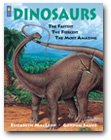
I guess I’m just a very curious person. I love finding out how things work or why people did what they did. I do my best to make it clear to kids how interesting our world is.
You’ve written many different styles of nonfiction (biography, early reader, reference book). Do you have a favorite type? What sort of challenges do you face with each one, or one in particular?
I think I’m lucky to be asked to write in so many styles. It means that I don’t get tired of one or the other and I think it affects, for the better, each book that I write.
I don’t have a favourite type — I love each one as I get started and usually ended up tearing out my hair over it at some point in the process!
The biggest challenge that all the styles have is how succinct one has to be when writing for children. I know it’s vital to allow room for white space and images but it can make it very difficult to explain things. As well, in my biographies for early readers, I have very few words in which to explain tough concepts to kids who are just developing their vocabulary and reading skills. Now that’s a challenge!
As an editor, do you have to work hard to turn off that side of your brain when you write? Do you find it hard to have your writing edited?
I’m not really aware of turning off the editor-side of my brain when I write. Sometimes my internal editor makes it difficult to get going on a spread but deadlines usually overcome that difficulty! I find that I edit a spread a lot before I go on to writing the next spread, so that when I put all the spreads together, there isn’t a lot of editing left for me to do. Of course my editor usually finds lots to improve!
Maybe because I’ve worked as an editor, I know the importance of being edited and how much an editor can improve a manuscript. I love being edited and I get nervous if the editor doesn’t ask for many changes.
As you write, do you footnote the facts or use another method to keep track of your sources?
I really try hard to keep careful track of my sources and facts. Either I photocopy pages from books (then mark up the photocopy to indicate exactly where the information is) or input facts from them, along with page references.
If I find information that I want to use off the Web, I put the complete text in a file, along with the URL and date.
It takes time to be this organized but I’m always grateful when I can quickly locate a fact later.
 For books such as The Kids Book of Canada at War, is it your job as the writer to propose what the main focus of each page is and what the other related boxes or sidebars on that page are? How do you denote which type of element each chunk of information is when you send in the manuscript?
For this book, my editor and I worked out the main focus of each page at the outline stage. The format of the “The Kids Book of” books is a spread-by-spread approach and I knew how many pages long the book was to be, and how many wars I wanted to write about, so it was fairly easy for me to create a rough outline. The hard part was refining the outline and realizing, for instance, that I had six pages to describe the entire War of 1812!
I also proposed the boxes and sidebars on each spread. Before each chunk of this sort of information I would indicate what it was by writing the title in square brackets, such as [Canadian Courage] or [Did You Know].
Are you ever involved in finding the photos for your books or is that someone else’s responsibility?
I think every publisher handles photo research differently and even books from the same publisher can be different. The great photo researcher Patricia Buckley found most of the photos in The Kids Book of Canada at War. However there are photos of my dad and other of my relatives in the book that I provided, and we also put out a request at Kids Can Press for photos and artifacts of relatives, and people were very generous.
As well, Val Wyatt, my editor, had seen a great Remembrance Day display at a bookstore in Victoria, British Columbia, and contacted the people who had supplied photos and letters. They were also kind enough to let us use the material. Elements like that can really make history come alive.
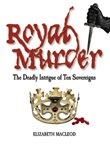 Royal Murder: The Deadly Intrigue of Ten Sovereigns sounds both fascinating and gruesome. What did you do to make this topic both interesting and not too scary for your audience?
Annick Press, who published the book, asked me to remove a lot of gruesome gore that I thought kids would like. I was surprised and disappointed but I agreed because I figured they had a better sense than I did of how much gore is enough.
I’m glad I went along with the changes — every review has mentioned that the book is gory in places and not for young children. I wonder if some of these reviewers have seen “kids’” movies and television shows lately?? However, perhaps reading about blood and guts allows your imagination to take you places that films and shows don’t. Isn’t that the magic of books?
How can a writer stay true to a difficult or controversial topic while keeping in mind the sensitivities of a young reader or do you think that this isn’t an issue?
If a writer is presenting a controversial topic, then I think it’s only fair to present both sides of it, even if you strongly disagree with one. Otherwise, it’s very difficult for a child, whose parents may hold the view opposite to yours. With controversial topics, I think it’s important to help kids develop their own opinions. A good editor can also help an author from coming across as too biased.
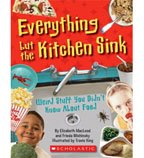 You collaborated with Frieda Wishinsky on Everything but the Kitchen Sink. What, if anything, surprised you about writing a book together with another writer? What was the best thing about working together? Any challenges?
Working with Frieda was amazingly easy. She’s a great writer and very flexible. We get along very well and/but our interests are very different. The book has ten chapters so it was clear right away that we’d both write five. We easily decided what the ten chapters should be and divided them almost as easily. I took the science chapters and Frieda took the history and social studies chapters. We had no idea that it would be so easy.
I’m sure we both found it difficult not to edit each other but that wasn’t our job. We had a great editor, Brenda Murray at Scholastic US, and it was always on my mind that any changes that Frieda or I suggested the other make, might take the book further away from where Brenda wanted it to go.
Out of the books you’ve written, would you pick one as a favourite or do you like them all more or less equally? If so, why?
Oooo, that’s like asking someone to name her favourite child! 
BUT — I especially loved writing about magician Harry Houdini. I had bought a book about him when I was in grade seven so he’s obviously been a longtime interest of mine. He had a strong, in-your-face personality so there were lots of great quotes by him, amazing stories (true or not!) and terrific photos. As well, I’d been nominated for more than 20 “Children’s Choice” awards across Canada before I finally won with my book about Harry! It’s hard not to love that! I was delighted to revisit his life when I wrote an early reader about him.
Have you seen any changes in the nonfiction books being published for kids in Canada since you began in the business?
I’ve been in the business for a long time so there are a lot more books out there now than when I started. It’s a lot tougher now to make a living writing than it was about ten years ago. People just aren’t buying many books the way they used to buy them. Today, as well, nonfiction has to offer something really different from what’s on the Web, since Web content is so much easier for kids to access. I think books that kids use just for researching projects are very hard sells right now since most kids just use the Web. I really appreciate teachers and librarians who insist kids use books when researching a topic!
What advice do you have for writers who want to write nonfiction?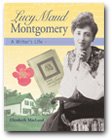
If you feel the urge to write nonfiction, then you have to try it! But you can’t assume that you’ll make a living at it. Many writers have part-time jobs, take time from their writing to do school and library visits (for which they’re paid) or find other ways to make their living.
Nonfiction writers need to be especially careful to be sure to look critically at publishers’ book lists to see what topics have all ready been covered and try to find a unique niche.
As I said before, I’m a very curious person so writing nonfiction lets me investigate a lot of different topics — and get paid for it! It can make a great change from writing fiction, as well. Writing nonfiction magazine articles, for kids or for adults, can be a great way to get into a writing career. And I can’t imagine anything I’d rather be doing than writing!
And your readers are very happy that you are doing all that writing. Thanks, Liz, for taking the time to give us a look behind your books.
For more on Elizabeth MacLeod’s books, background, and school presentations, you can look her up here, and find more on her publishers Annick Press, Kids Can Press and Scholastic.
 See all the other author interviews under my Talking to Creative Canadians label.
© Lizann Flatt, www.lizannflatt.com
No part of this blog may be used without written permission from the author.
No part of this blog may be used without written permission from the author.
Page 2 of 2